Volume 7, Issue 1 (Vol 7, No 1 2026)
2026, 7(1): 96-111 |
Back to browse issues page



Ethics code: IR.IAU.Z.REC.1403.102


Download citation:
BibTeX | RIS | EndNote | Medlars | ProCite | Reference Manager | RefWorks
Send citation to:


BibTeX | RIS | EndNote | Medlars | ProCite | Reference Manager | RefWorks
Send citation to:
Khodavandi Z, Kiani Q, Sobhi A. (2026). Effects of Gestalt Play Therapy on Internalizing and Externalizing Problems in Children Aged 7-10. Journal of Childhood Health and Education. 7(1), 96-111. doi:10.32598/JECHE.7.1.472.1
URL: http://jeche.ir/article-1-414-en.html
URL: http://jeche.ir/article-1-414-en.html

1- Department of Psychology, Za.C., Islamic Azad University, Zanjan, Iran.
Full-Text [PDF 6482 kb]
(107 Downloads)
| Abstract (HTML) (873 Views)
Full-Text: (99 Views)
Introduction
Childhood, particularly the middle childhood (ages 7 to 10), is a critical developmental stage marked by significant emotional, cognitive, and social transitions. During these years, many children exhibit emotional–behavioral difficulties that may negatively affect their interpersonal relationships, academic performance, and long-term psychological adjustment. These difficulties are commonly categorized into internalizing problems (e.g., anxiety, depression, somatic complaints, withdrawal) and externalizing problems (e.g., aggression, rule-breaking, impulsivity, oppositional defiant behaviors). International epidemiological studies indicate that 15-25% of children worldwide suffer from clinically significant internalizing or externalizing symptoms. In Iran, national data also show that approximately 18–22% of children experience internalizing problems and 16–20% display externalizing difficulties. These symptoms often co-occur and follow chronic developmental trajectories if left untreated.
Children’s limited cognitive, linguistic, and emotional capacity often restricts their ability to verbally express distress, making play therapy as the most natural and developmentally appropriate method for therapeutic intervention. Gestalt play therapy, developed by Violet Oaklander and later expanded by contemporary scholars, emphasizes sensory-emotional awareness, bodily expression, contact with the environment, and integration of fragmented experiences. In Gestalt theory, internalizing problems reflect “implosion” or blocked emotional energy, whereas externalizing problems represent “explosion” or dysregulated release of such energy. Techniques such as the empty chair, expressive arts, role-play, projection, and sensory-based exploration help children access and resolve unfinished emotional experiences.
Growing empirical evidence shows that Gestalt play therapy contributes to significant improvements in emotional regulation, self-support, social functioning, and behavioral adjustment. Research has documented reductions in anxiety, depression, trauma, impulsivity, and aggression following Gestalt-based interventions. However, despite promising findings, studies in Iran remain limited, rely mostly on small sample sizes, and lack standardized protocols or comparison groups. Therefore, the present study aimed to examine the effectiveness of Gestalt play therapy in reducing both internalizing and externalizing problems among children aged 7-10 years in Tabriz, Iran.
Research Methods
This is a quasi-experimental study with a pretest/posttest design using a control group. The study population included all children aged 7–10 years in Tabriz who were referred to the Department of Education’s psychological counseling centers during 2024–2025 for treatment of their emotional-behavioral difficulties. Using a purposive sampling method, 24 eligible children were selected and randomly assigned to intervention (n=12) and control (n=12) groups. Sample size was determined based on a power analysis (test power=0.80, α=0.05, effect size=0.60). Inclusion criteria were: age 7–10, diagnosis of internalizing or externalizing problems based on the Child Behavior Checklist (CBCL) score (T≥63), not having autism, intellectual disability, or major medical illnesses, no psychiatric medication in the past three months, and parental consent. Exclusion criteria were absence from more than two sessions, initiation of any treatment or medication during the study, major life crises, or withdrawal of consent. The CBCL is a 115-item parent-report inventory that provides T-scores for internalizing, externalizing, and total problems. Validity and reliability of the Persian version have already been reported as high (α=0.63–0.95; test–retest reliability=0.67–0.92).
The CBCL was completed by parents, and each child was observed clinically for 30 minutes in the playroom.
After screening, consent, and random assignment, both groups completed pretest assessments. The intervention group then received the therapy while the control group remained wait-listed. The intervention group received 12 weekly sessions of Gestalt play therapy (each session for 75 minutes), based on Oaklander’s (2006) and Blom’s (2023) protocols. Sessions included expressive arts, projection tasks, empty-chair task, sensory awareness activities, emotional symbolization (stickers, drawings, collages), anger-release exercises, role play, and imagination-based techniques (e.g., “magic wand,” “peeling the onion of emotions”). A checklist ensured treatment fidelity, reviewed by an independent supervisor. Posttests were administered one week after the final session. Descriptive statistics, univariate ANCOVA, and its assumptions (normality, homogeneity of variance, and regression slope) were used for data analysis in SPSS software, version 25. Significance level was set at 0.05.
Results
Table 1 presents the mean scores of internalizing and externalizing problems.
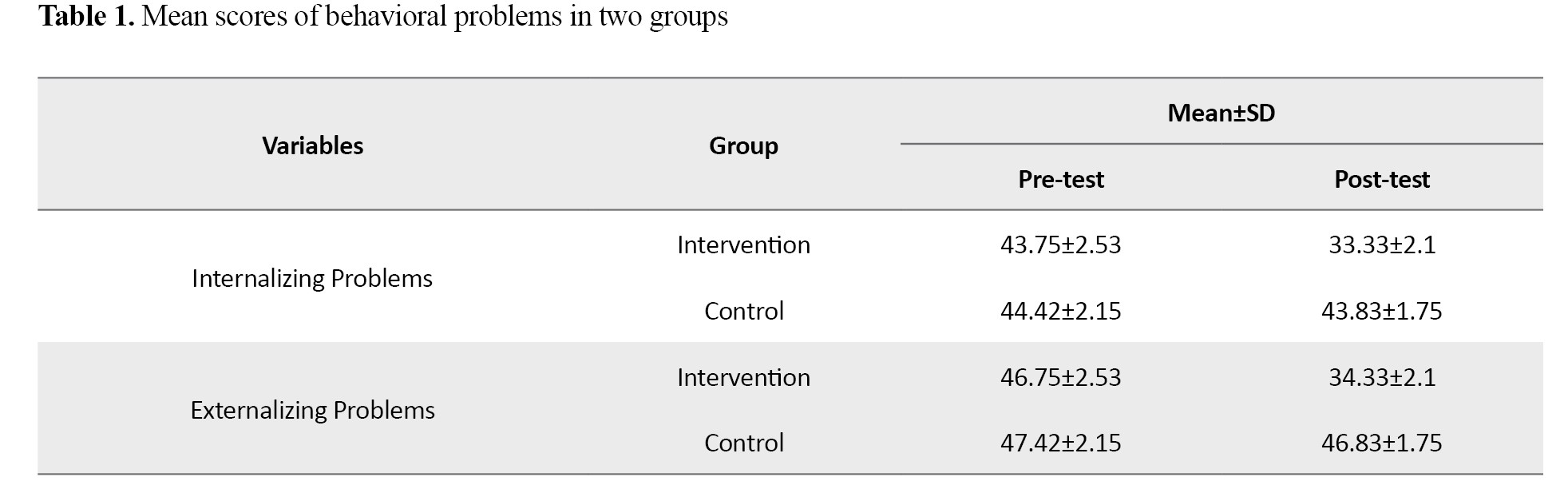
The two groups were similar at baseline. After therapy, the intervention group showed high reductions in both internalizing and externalizing problems, whereas the control group exhibited almost no change. ANCOVA results indicated a highly significant effect of Gestalt play therapy on both variables after controlling for pretest scores (Table 2).
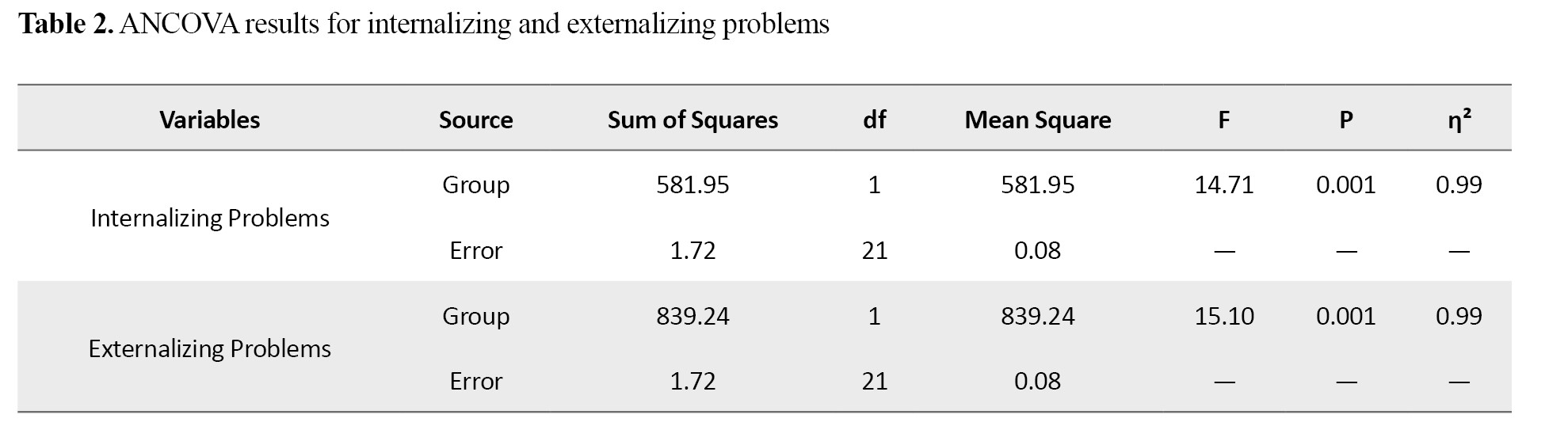
The effect sizes (η² =0.99 for two variables) were very large, confirming a strong clinical impact.
Conclusion
The findings revealed that the intervention group receiving Gestalt play therapy showed significant reductions in both internalizing and externalizing problems compared to the control group, supporting the therapeutic value of experiential, relational, and emotion-focused approaches in childhood mental health.
Consistent with prior international studies, Gestalt play therapy successfully reduced internalizing symptoms such as anxiety, withdrawal, and somatic complaints. According to Gestalt theory, these symptoms reflect restricted emotional expression and blocked sensory-affective energy. Techniques used in this study—such as emotional drawings, sensory awareness tasks, “peeling the onion” exercises, and controlled expression of distress—enabled children to externalize previously internalized emotional content, increasing self-support and emotional clarity. These mechanisms likely contributed to the observed reductions in internalizing problems.
Similarly, reductions in externalizing problems align with findings from previous studies showing that Gestalt-based interventions reduce aggression, impulsivity, and rule-breaking behaviors. Experiential methods such as the empty chair technique, role playing, symbolic expression, and motor-based activities helped children channel high emotional arousal into constructive behaviors. The Gestalt principle that behavioral change emerges from increasing awareness—not from direct behavioral correction—explains why aggressive or oppositional behaviors decreased without explicit behavioral training. The extremely large effect sizes of Gestalt play therapy can also be attributed to the structured 12-session protocol, strong therapeutic alliance, and use of multisensory, bodily-affective techniques that match children’s developmental level. Because many children in this age range struggle with verbal emotional expression, a non-verbal and experiential approach may be especially effective.
Despite robust findings, this study had some limitations. The small sample size, absence of a follow-up phase, and use of parent-report instruments limit the generalizability of the findings. Future research should replicate results with larger randomized controlled trials, multi-informant assessments, longitudinal follow-ups, and comparisons with other therapeutic modalities such as cognitive behavioral therapy, play therapy, or integrative approaches. Overall, findings demonstrate that Gestalt play therapy is a powerful and culturally appropriate intervention that can effectively reduce both internalizing and externalizing symptoms in children. Integrating this approach into school counseling programs, early intervention programs, and community mental health services may significantly enhance children’s emotional well-being and behavioral adjustment.
Ethical Considerations
Compliance with ethical guidelines
Ethical approval was obtained from the Ethics Committee of Islamic Azad University, Zanjan Branch (Code: IR.IAU.Z.REC.1403.102). The participants were assured of the confidentiality of their information and were free to leave the study at any time. Informed consent was obtained from them.
Funding
This article was extracted from the PhD thesis of Zahra Khodavandi in the field of psychology at the Islamic Azad University, Zanjan Branch. The research has not received any financial support from governmental, private, or non-profit organizations
Authors contributions
All ethical principles were observed in this study. Since the research did not include any experiments on human or animal samples, no ethics approval code was required.
Conflicts of interest
The authors declared no conflict of interest.
Acknowledgments
The authors would like to thank all participants for their cooperation and time in this research.
References
Abdollahi BeghrAbadi, Q. (2023). [The effectiveness of Gestalt play therapy on reducing aggression and test anxiety in students with learning disabilities (Persian)]. Rooyesh-e-Ravanshenasi Journa, 12(5), 31-40. [Link]
Achenbach, T. M. (1991). Manual for the Teacher’s Report Form and 1991 Profile. Burlington, VT: University of Vermont, Department of Psychiatry. [Link]
Achenbach, T. M., & Rescolar, L. A. (2001). Manual for the ASEBA School - age forms and profiles. Burlington: University of Vermont Research Center for Children, Youth, & Families. [Link]
Achenbach, T. M., Ivanova, M. Y., & Rescorla, L. A. (2017). Empirically based assessment and taxonomy of psychopathology for ages 1½-90+ years: Developmental, multi-informant, and multicultural findings. Compr Psychiatry, 79:4-18. [DOI10.1016/j.comppsych.2017.03.006] [PMID]
American Psychiatric Association. (2022). Diagnostic and statistical manual of mental disorders (5th ed., text rev.). Virginia: American Psychiatric Association. [DOI:10.1176/appi.books.9780890425787]
Behjat, B., Semsar Yazdi, S., & Demehri, F. (2025). [Comparing of the Effects of Parent-child Interaction Therapy and Childparent Relationship Therapy on Behavioral Problems and Family Functioning in Preschool Children (Persian)]. Journal of Childhood Health and Education, 6(3), 362-375. [Link]
Beisser, A. R. (1970). The paradoxical theory of change. In J. Fagan & I. L. Shepherd (Eds.), Gestalt therapy now (pp. 77-80). New York: Harper & Row. [Link]
Blom, R. (2006). The handbook of Gestalt play therapy: Practical guidelines for child therapists. Jessica Kingsley Publishers. [Link]
Calvet, B., Vallejo, J. L., Plu, Y., Soulat, I., Foucher, A., & Clément, J. P. (2025). Use of the Temperament and Character Inventory to describe the effectiveness of Gestalt therapy. Frontiers in Psychiatry, 16, 1280954. [DOI:10.3389/fpsyt.2025.1280954] [PMID] [PMCID]
Di Sarno, A. D., Barone, M., De Masis, M., Di Gennaro, R., Fabbricino, I., & Forino, A. A., et al. (2025). Validity and effectiveness of Gestalt Play Therapy: A proposal for defining a shared research protocol. Phenomena Journal: International Journal of Psychopathology, Neuroscience and Psychotherapy, 7(3), 98-105. [DOI:10.32069/PJ.2021.2.241]
Emami Mehr, S., Amiri Majd, M., Ghamari, M., & Bazzazian, S. (2024). [Compare the Effectiveness of Art therapy and Cognitive-Behavioral Play therapy on Preschool Children’s Anxiety (Persian)]. Rooyesh, 12(11), 141-150. [Link]
Farahzadi, M., & Masafi, S. (2013). Effectiveness of Gestalt and cognitive-behavioural play therapy in decreasing dysthymic disorder. Procedia - Social and Behavioral Sciences, 84, 1642-1645. [DOI:10.1016/j.sbspro.2013.07.007]
Ghorbani, A., Zare Neystanak, M., & Khoshakhlaq, H. (2025). [The effectiveness of integrative transdiagnostic therapy on social competence and cognitive fusion in adolescents with externalizing behavioral-emotional disorders (Persian)]. Journal of Modern Psychological Research, 20(77), 61-74. [DOI:10.22034/jmpr.2024.59991.6018]
Hoseini, M., Kakavand, A., & Shiri, E. (2024). [Comparative study of general health and maternal sensitivity in preschool children with Internalization and Externalization Symptoms and normal (Persian)]. Journal of Early Childhood Health and Education, 5(2), 67-79. [Link]
Kenney-Noziska, S., & Schaefer, C. E. (2023). Play therapy with children: A comprehensive guide to evidence-based practices. London; Routledge. [Link]
Minaee A. (2006). Adaptation and standardization of Child Behavior Checklist, Youth Self-report, and Teacher’s Report Forms. Journal Exceptional children, 6 (1):529-558[Persian]. [Link]
Najmi, M., Ghorban Jahromi, R., Sadipour, E., & Karimzadeh, M. (2025). Comparing the Effectiveness of Attachment-Centered Theraplay and Child-Parent Relationship Play Therapies on Emotion Regulation in Children with Separation Anxiety Disorder. Journal of Childhood Health and Education, 5(4), 184-195. [DOI:10.32592/jeche.5.4.184]
Oaklander, V. (2006). Windows to our children: A Gestalt therapy approach to children and adolescents. Perth: Gestalt Journal Press. [Link]
Vergunst, F., Commisso, M., Geoffroy, M. C., Temcheff, C., Poirier, M., & Park, J., et al. (2023). Association of Childhood Externalizing, Internalizing, and Comorbid Symptoms With Long-term Economic and Social Outcomes. JAMA Network Open, 6(1), e2249568. [DOI:10.1001/jamanetworkopen.2022.49568] [PMID]
Reef, J., Diamantopoulou, S., van Meurs, I., Verhulst, F. C., & van der Ende, J. (2021). Developmental trajectories of child to adolescent externalizing and internalizing behavior and their differential prediction of adult psychopathology. Journal of Abnormal Child Psychology, 49(2), 215-226. [DOI:10.1007/s00127-010-0297-9] [PMID] [PMCID]
Safary, S., Faramarzi, S., & Abedi, A. (2014). [Effectiveness of cognitive-behavioral play therapy on behavioral symptoms of disobedient students (Persian)]. Studies in Medical Sciences, 25(3), 258-267. [Link]
Sayal, K., Washbrook, E., & Propper, C. (2024). Longitudinal associations between externalizing and internalizing behaviors in childhood and adult socioeconomic outcomes. Journal of Child Psychology and Psychiatry, 65(4), 567-578. [DOI:10.1016/j.jaac.2015.02.007] [PMID]
Shahrad, M., Hosseininasab, S. D., & Alivandi Vafa, M. (2023). [Comparing the Effectiveness of Gestalt-Based Play Therapy and Parent Behavior Management Training on Impulsivity of Children with Symptoms of Attention Deficit Hyperactivity Disorder (Persian)]. Journal of Childhood Health and Education, 4(3), 4. [DOI:10.32592/jeche.4.3.51]
Soleimankhan, S., Johari Fard, R., & Hafezi, F. (2024). The effectiveness of play therapy with an attachment approach on self-regulation and resilience of students with attention deficit hyperactivity disorder in Tehran. Journal of Childhood Health and Education, 4(4), 103-118. [DOI:10.32592/jeche.4.4.103]
Stripling, T. (2021). Gestalt interventions benefitting children and adolescents: A literature review. Gestalt Review, 25(2), 197-220. [DOI:10.5325/gestaltreview.25.2.0197]
Swan, K. L., & Ray, D. C. (2024). Integrative play therapy for externalizing behaviors: A systematic review. International Journal of Play Therapy, 33(1), 22-35.
Tavakoli, S., Abbasi, F., Heydari, B., & Akhondzadeh, M. (2024). Comparing the effectiveness of cognitive behavioral play therapy and Gestalt play therapy on vandalistic behaviors, impulsivity, and cognitive flexibility in aggressive male elementary students. Journal of Assessment and Research in Applied Counseling, 6(3). [DOI:10.61838/kman.jarac.6.3.4]
World Health Organization. (2022). World mental health report: Transforming mental health for all. Geneva: World Health Organization. [Link]
Childhood, particularly the middle childhood (ages 7 to 10), is a critical developmental stage marked by significant emotional, cognitive, and social transitions. During these years, many children exhibit emotional–behavioral difficulties that may negatively affect their interpersonal relationships, academic performance, and long-term psychological adjustment. These difficulties are commonly categorized into internalizing problems (e.g., anxiety, depression, somatic complaints, withdrawal) and externalizing problems (e.g., aggression, rule-breaking, impulsivity, oppositional defiant behaviors). International epidemiological studies indicate that 15-25% of children worldwide suffer from clinically significant internalizing or externalizing symptoms. In Iran, national data also show that approximately 18–22% of children experience internalizing problems and 16–20% display externalizing difficulties. These symptoms often co-occur and follow chronic developmental trajectories if left untreated.
Children’s limited cognitive, linguistic, and emotional capacity often restricts their ability to verbally express distress, making play therapy as the most natural and developmentally appropriate method for therapeutic intervention. Gestalt play therapy, developed by Violet Oaklander and later expanded by contemporary scholars, emphasizes sensory-emotional awareness, bodily expression, contact with the environment, and integration of fragmented experiences. In Gestalt theory, internalizing problems reflect “implosion” or blocked emotional energy, whereas externalizing problems represent “explosion” or dysregulated release of such energy. Techniques such as the empty chair, expressive arts, role-play, projection, and sensory-based exploration help children access and resolve unfinished emotional experiences.
Growing empirical evidence shows that Gestalt play therapy contributes to significant improvements in emotional regulation, self-support, social functioning, and behavioral adjustment. Research has documented reductions in anxiety, depression, trauma, impulsivity, and aggression following Gestalt-based interventions. However, despite promising findings, studies in Iran remain limited, rely mostly on small sample sizes, and lack standardized protocols or comparison groups. Therefore, the present study aimed to examine the effectiveness of Gestalt play therapy in reducing both internalizing and externalizing problems among children aged 7-10 years in Tabriz, Iran.
Research Methods
This is a quasi-experimental study with a pretest/posttest design using a control group. The study population included all children aged 7–10 years in Tabriz who were referred to the Department of Education’s psychological counseling centers during 2024–2025 for treatment of their emotional-behavioral difficulties. Using a purposive sampling method, 24 eligible children were selected and randomly assigned to intervention (n=12) and control (n=12) groups. Sample size was determined based on a power analysis (test power=0.80, α=0.05, effect size=0.60). Inclusion criteria were: age 7–10, diagnosis of internalizing or externalizing problems based on the Child Behavior Checklist (CBCL) score (T≥63), not having autism, intellectual disability, or major medical illnesses, no psychiatric medication in the past three months, and parental consent. Exclusion criteria were absence from more than two sessions, initiation of any treatment or medication during the study, major life crises, or withdrawal of consent. The CBCL is a 115-item parent-report inventory that provides T-scores for internalizing, externalizing, and total problems. Validity and reliability of the Persian version have already been reported as high (α=0.63–0.95; test–retest reliability=0.67–0.92).
The CBCL was completed by parents, and each child was observed clinically for 30 minutes in the playroom.
After screening, consent, and random assignment, both groups completed pretest assessments. The intervention group then received the therapy while the control group remained wait-listed. The intervention group received 12 weekly sessions of Gestalt play therapy (each session for 75 minutes), based on Oaklander’s (2006) and Blom’s (2023) protocols. Sessions included expressive arts, projection tasks, empty-chair task, sensory awareness activities, emotional symbolization (stickers, drawings, collages), anger-release exercises, role play, and imagination-based techniques (e.g., “magic wand,” “peeling the onion of emotions”). A checklist ensured treatment fidelity, reviewed by an independent supervisor. Posttests were administered one week after the final session. Descriptive statistics, univariate ANCOVA, and its assumptions (normality, homogeneity of variance, and regression slope) were used for data analysis in SPSS software, version 25. Significance level was set at 0.05.
Results
Table 1 presents the mean scores of internalizing and externalizing problems.
The two groups were similar at baseline. After therapy, the intervention group showed high reductions in both internalizing and externalizing problems, whereas the control group exhibited almost no change. ANCOVA results indicated a highly significant effect of Gestalt play therapy on both variables after controlling for pretest scores (Table 2).
The effect sizes (η² =0.99 for two variables) were very large, confirming a strong clinical impact.
Conclusion
The findings revealed that the intervention group receiving Gestalt play therapy showed significant reductions in both internalizing and externalizing problems compared to the control group, supporting the therapeutic value of experiential, relational, and emotion-focused approaches in childhood mental health.
Consistent with prior international studies, Gestalt play therapy successfully reduced internalizing symptoms such as anxiety, withdrawal, and somatic complaints. According to Gestalt theory, these symptoms reflect restricted emotional expression and blocked sensory-affective energy. Techniques used in this study—such as emotional drawings, sensory awareness tasks, “peeling the onion” exercises, and controlled expression of distress—enabled children to externalize previously internalized emotional content, increasing self-support and emotional clarity. These mechanisms likely contributed to the observed reductions in internalizing problems.
Similarly, reductions in externalizing problems align with findings from previous studies showing that Gestalt-based interventions reduce aggression, impulsivity, and rule-breaking behaviors. Experiential methods such as the empty chair technique, role playing, symbolic expression, and motor-based activities helped children channel high emotional arousal into constructive behaviors. The Gestalt principle that behavioral change emerges from increasing awareness—not from direct behavioral correction—explains why aggressive or oppositional behaviors decreased without explicit behavioral training. The extremely large effect sizes of Gestalt play therapy can also be attributed to the structured 12-session protocol, strong therapeutic alliance, and use of multisensory, bodily-affective techniques that match children’s developmental level. Because many children in this age range struggle with verbal emotional expression, a non-verbal and experiential approach may be especially effective.
Despite robust findings, this study had some limitations. The small sample size, absence of a follow-up phase, and use of parent-report instruments limit the generalizability of the findings. Future research should replicate results with larger randomized controlled trials, multi-informant assessments, longitudinal follow-ups, and comparisons with other therapeutic modalities such as cognitive behavioral therapy, play therapy, or integrative approaches. Overall, findings demonstrate that Gestalt play therapy is a powerful and culturally appropriate intervention that can effectively reduce both internalizing and externalizing symptoms in children. Integrating this approach into school counseling programs, early intervention programs, and community mental health services may significantly enhance children’s emotional well-being and behavioral adjustment.
Ethical Considerations
Compliance with ethical guidelines
Ethical approval was obtained from the Ethics Committee of Islamic Azad University, Zanjan Branch (Code: IR.IAU.Z.REC.1403.102). The participants were assured of the confidentiality of their information and were free to leave the study at any time. Informed consent was obtained from them.
Funding
This article was extracted from the PhD thesis of Zahra Khodavandi in the field of psychology at the Islamic Azad University, Zanjan Branch. The research has not received any financial support from governmental, private, or non-profit organizations
Authors contributions
All ethical principles were observed in this study. Since the research did not include any experiments on human or animal samples, no ethics approval code was required.
Conflicts of interest
The authors declared no conflict of interest.
Acknowledgments
The authors would like to thank all participants for their cooperation and time in this research.
References
Abdollahi BeghrAbadi, Q. (2023). [The effectiveness of Gestalt play therapy on reducing aggression and test anxiety in students with learning disabilities (Persian)]. Rooyesh-e-Ravanshenasi Journa, 12(5), 31-40. [Link]
Achenbach, T. M. (1991). Manual for the Teacher’s Report Form and 1991 Profile. Burlington, VT: University of Vermont, Department of Psychiatry. [Link]
Achenbach, T. M., & Rescolar, L. A. (2001). Manual for the ASEBA School - age forms and profiles. Burlington: University of Vermont Research Center for Children, Youth, & Families. [Link]
Achenbach, T. M., Ivanova, M. Y., & Rescorla, L. A. (2017). Empirically based assessment and taxonomy of psychopathology for ages 1½-90+ years: Developmental, multi-informant, and multicultural findings. Compr Psychiatry, 79:4-18. [DOI10.1016/j.comppsych.2017.03.006] [PMID]
American Psychiatric Association. (2022). Diagnostic and statistical manual of mental disorders (5th ed., text rev.). Virginia: American Psychiatric Association. [DOI:10.1176/appi.books.9780890425787]
Behjat, B., Semsar Yazdi, S., & Demehri, F. (2025). [Comparing of the Effects of Parent-child Interaction Therapy and Childparent Relationship Therapy on Behavioral Problems and Family Functioning in Preschool Children (Persian)]. Journal of Childhood Health and Education, 6(3), 362-375. [Link]
Beisser, A. R. (1970). The paradoxical theory of change. In J. Fagan & I. L. Shepherd (Eds.), Gestalt therapy now (pp. 77-80). New York: Harper & Row. [Link]
Blom, R. (2006). The handbook of Gestalt play therapy: Practical guidelines for child therapists. Jessica Kingsley Publishers. [Link]
Calvet, B., Vallejo, J. L., Plu, Y., Soulat, I., Foucher, A., & Clément, J. P. (2025). Use of the Temperament and Character Inventory to describe the effectiveness of Gestalt therapy. Frontiers in Psychiatry, 16, 1280954. [DOI:10.3389/fpsyt.2025.1280954] [PMID] [PMCID]
Di Sarno, A. D., Barone, M., De Masis, M., Di Gennaro, R., Fabbricino, I., & Forino, A. A., et al. (2025). Validity and effectiveness of Gestalt Play Therapy: A proposal for defining a shared research protocol. Phenomena Journal: International Journal of Psychopathology, Neuroscience and Psychotherapy, 7(3), 98-105. [DOI:10.32069/PJ.2021.2.241]
Emami Mehr, S., Amiri Majd, M., Ghamari, M., & Bazzazian, S. (2024). [Compare the Effectiveness of Art therapy and Cognitive-Behavioral Play therapy on Preschool Children’s Anxiety (Persian)]. Rooyesh, 12(11), 141-150. [Link]
Farahzadi, M., & Masafi, S. (2013). Effectiveness of Gestalt and cognitive-behavioural play therapy in decreasing dysthymic disorder. Procedia - Social and Behavioral Sciences, 84, 1642-1645. [DOI:10.1016/j.sbspro.2013.07.007]
Ghorbani, A., Zare Neystanak, M., & Khoshakhlaq, H. (2025). [The effectiveness of integrative transdiagnostic therapy on social competence and cognitive fusion in adolescents with externalizing behavioral-emotional disorders (Persian)]. Journal of Modern Psychological Research, 20(77), 61-74. [DOI:10.22034/jmpr.2024.59991.6018]
Hoseini, M., Kakavand, A., & Shiri, E. (2024). [Comparative study of general health and maternal sensitivity in preschool children with Internalization and Externalization Symptoms and normal (Persian)]. Journal of Early Childhood Health and Education, 5(2), 67-79. [Link]
Kenney-Noziska, S., & Schaefer, C. E. (2023). Play therapy with children: A comprehensive guide to evidence-based practices. London; Routledge. [Link]
Minaee A. (2006). Adaptation and standardization of Child Behavior Checklist, Youth Self-report, and Teacher’s Report Forms. Journal Exceptional children, 6 (1):529-558[Persian]. [Link]
Najmi, M., Ghorban Jahromi, R., Sadipour, E., & Karimzadeh, M. (2025). Comparing the Effectiveness of Attachment-Centered Theraplay and Child-Parent Relationship Play Therapies on Emotion Regulation in Children with Separation Anxiety Disorder. Journal of Childhood Health and Education, 5(4), 184-195. [DOI:10.32592/jeche.5.4.184]
Oaklander, V. (2006). Windows to our children: A Gestalt therapy approach to children and adolescents. Perth: Gestalt Journal Press. [Link]
Vergunst, F., Commisso, M., Geoffroy, M. C., Temcheff, C., Poirier, M., & Park, J., et al. (2023). Association of Childhood Externalizing, Internalizing, and Comorbid Symptoms With Long-term Economic and Social Outcomes. JAMA Network Open, 6(1), e2249568. [DOI:10.1001/jamanetworkopen.2022.49568] [PMID]
Reef, J., Diamantopoulou, S., van Meurs, I., Verhulst, F. C., & van der Ende, J. (2021). Developmental trajectories of child to adolescent externalizing and internalizing behavior and their differential prediction of adult psychopathology. Journal of Abnormal Child Psychology, 49(2), 215-226. [DOI:10.1007/s00127-010-0297-9] [PMID] [PMCID]
Safary, S., Faramarzi, S., & Abedi, A. (2014). [Effectiveness of cognitive-behavioral play therapy on behavioral symptoms of disobedient students (Persian)]. Studies in Medical Sciences, 25(3), 258-267. [Link]
Sayal, K., Washbrook, E., & Propper, C. (2024). Longitudinal associations between externalizing and internalizing behaviors in childhood and adult socioeconomic outcomes. Journal of Child Psychology and Psychiatry, 65(4), 567-578. [DOI:10.1016/j.jaac.2015.02.007] [PMID]
Shahrad, M., Hosseininasab, S. D., & Alivandi Vafa, M. (2023). [Comparing the Effectiveness of Gestalt-Based Play Therapy and Parent Behavior Management Training on Impulsivity of Children with Symptoms of Attention Deficit Hyperactivity Disorder (Persian)]. Journal of Childhood Health and Education, 4(3), 4. [DOI:10.32592/jeche.4.3.51]
Soleimankhan, S., Johari Fard, R., & Hafezi, F. (2024). The effectiveness of play therapy with an attachment approach on self-regulation and resilience of students with attention deficit hyperactivity disorder in Tehran. Journal of Childhood Health and Education, 4(4), 103-118. [DOI:10.32592/jeche.4.4.103]
Stripling, T. (2021). Gestalt interventions benefitting children and adolescents: A literature review. Gestalt Review, 25(2), 197-220. [DOI:10.5325/gestaltreview.25.2.0197]
Swan, K. L., & Ray, D. C. (2024). Integrative play therapy for externalizing behaviors: A systematic review. International Journal of Play Therapy, 33(1), 22-35.
Tavakoli, S., Abbasi, F., Heydari, B., & Akhondzadeh, M. (2024). Comparing the effectiveness of cognitive behavioral play therapy and Gestalt play therapy on vandalistic behaviors, impulsivity, and cognitive flexibility in aggressive male elementary students. Journal of Assessment and Research in Applied Counseling, 6(3). [DOI:10.61838/kman.jarac.6.3.4]
World Health Organization. (2022). World mental health report: Transforming mental health for all. Geneva: World Health Organization. [Link]
Type of Study: Research |
Subject:
Special
Received: 2026/02/21 | Accepted: 2026/03/21 | Published: 2026/03/21
Received: 2026/02/21 | Accepted: 2026/03/21 | Published: 2026/03/21
Send email to the article author
| Rights and permissions | |
 |
This work is licensed under a Creative Commons Attribution-NonCommercial 4.0 International License. |