Volume 6, Issue 4 (Vol 6, No 4 (22) 2026)
2026, 6(4): 540-555 |
Back to browse issues page


Ethics code: 14030905/273/3


Download citation:
BibTeX | RIS | EndNote | Medlars | ProCite | Reference Manager | RefWorks
Send citation to:


BibTeX | RIS | EndNote | Medlars | ProCite | Reference Manager | RefWorks
Send citation to:
Mirgol A, Ghorbani Z, Mohammadi F, Alisoufi A N, Soheyli M. (2026). Comparing the Effect of Islamic Quality of Life Education and Dialectical Behavior Therapy Skills on Self-Harming Behaviors in Delinquent Adolescents. Journal of Childhood Health and Education. 6(4), 540-555. doi:10.32598/JECHE.6.4.369.1
URL: http://jeche.ir/article-1-336-en.html
URL: http://jeche.ir/article-1-336-en.html

1- Department of Psychology, Faculty of Educational Sciences and Psychology, Payam Noor University, Zahedan, Iran.
2- Department of Educational Psychology, NT.C., Islamic Azad University, Tehran, Iran.
3- Department of psychology and Counselling, Farhangian University, Tehran, Iran.
4- Department of Educational Psychology, SR.C., Islamic Azad University, Tehran, Iran.
2- Department of Educational Psychology, NT.C., Islamic Azad University, Tehran, Iran.
3- Department of psychology and Counselling, Farhangian University, Tehran, Iran.
4- Department of Educational Psychology, SR.C., Islamic Azad University, Tehran, Iran.
Keywords: Dialectical behavior therapy, Delinquent adolescents, Islamic quality of life, Self-Harming behaviors
Full-Text [PDF 6853 kb]
(232 Downloads)
| Abstract (HTML) (595 Views)
Full-Text: (63 Views)
Introduction
Research findings show that some adolescents express their psychological distress and internal contradictions through behaviors, such as self-harm to relieve negative emotions. Although researchers have increasingly focused on intentional self-harm in adolescents in recent years, information regarding this harmful behavior remains limited. There is also no accurate information about the prevalence of self-harm behaviors in non-clinical samples (Kentup et al., 2021). Given the importance of this issue, the impact of various factors on adolescent self-harm, particularly in delinquent adolescents, is widely acknowledged. Therefore, the use of prevention and treatment methods is an undeniable necessity. Therefore, this study aimed to compare the effect of Islamic quality of life education and dialectical behavior therapy skills training on self-harm behaviors in delinquent adolescents..
Research Methods
This research conducted as a quasi-experimental study employing a pre-test, post-test, and follow-up design, involving two intervention groups and one control group. It is a quantitative study in terms of research approach. The population for this study comprised all adolescents residing in the Zahedan Correctional Center in 2024. Using the purposive sampling method and employing the Power*G software (with an effect size of 0.15) to determine an appropriate sample size for quasi-experimental studies, the sample size for the present study was set at 60 adolescents.
The measurement tool used in this study was the Klonsky and Glenn Self-Harm Questionnaire. The first intervention group received the Islamic quality of life improvement training course, and the second intervention group received dialectical behavior therapy skills training. These interventions were delivered in 8 group sessions, each lasting 60 minutes (one session per week). The control group was placed on a waiting list. Multivariate analysis of covariance (MANCOVA) was used to analyze the research data.
Results
The results of Table 6 indicate that, based on the significance levels (p-values) for all within-group test statistics, the null hypothesis was rejected. Therefore, it can be concluded that the effect of the independent factor (time: pre-test, post-test, and follow-up) on the dependent variables was statistically significant. Table 1 thus presents the results of repeated measures ANOVA regarding the effect of time on the components of self-injurious behaviors among delinquent adolescents.
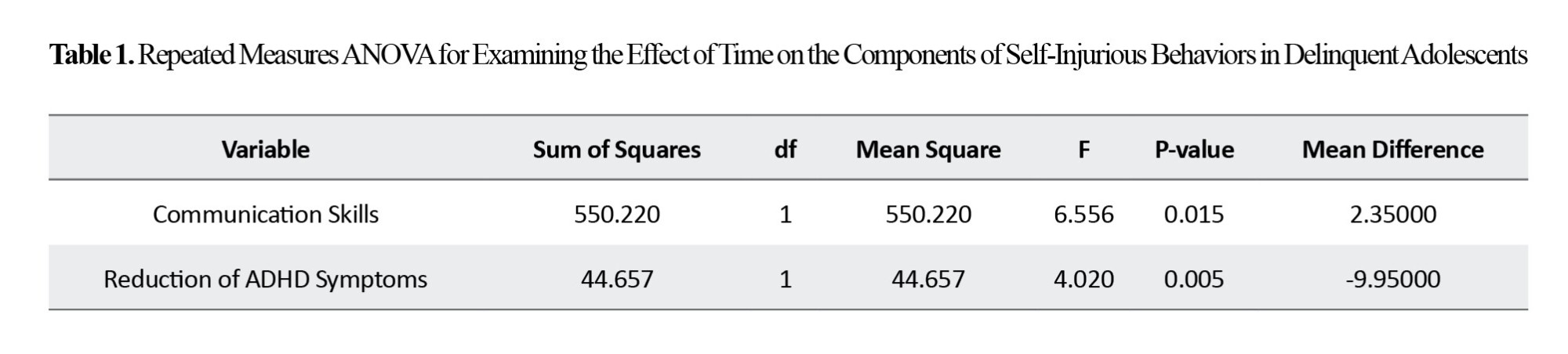
Table 2 provides the results of Duncan’s post hoc test for comparing the mean scores of the three groups (Intervention 1, Intervention 2, and Control) across the three measurement stages.
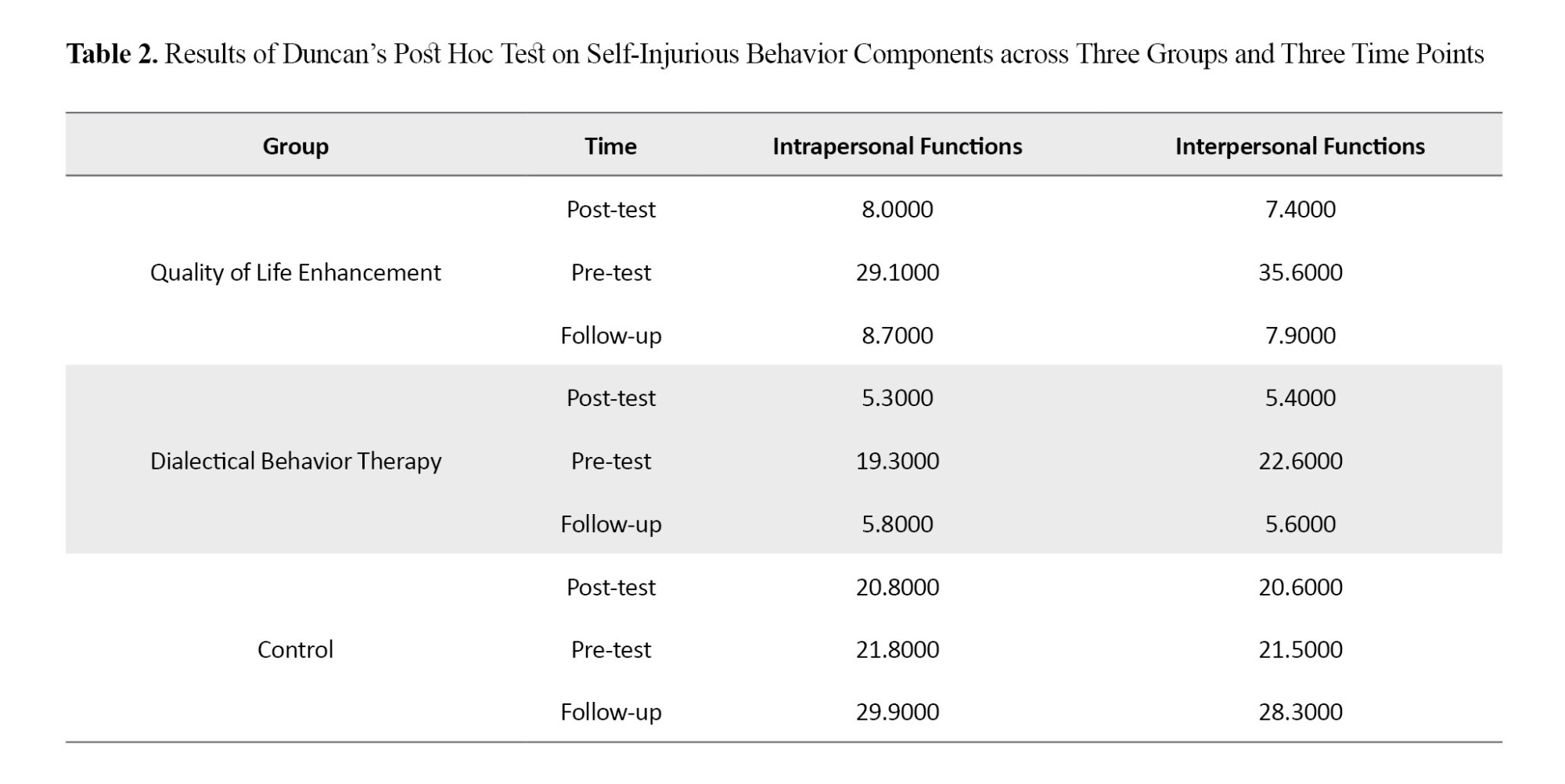
The results of Table 2 demonstrate that self-injurious behaviors differ significantly across time within the three subgroups. The lowest mean scores were observed in the post-test condition for both intrapersonal functions (M=5.3) and interpersonal functions (M=5.4) following the dialectical behavior therapy intervention. Similarly, the post-test of the Quality of Life intervention showed the lowest means for interpersonal functions (M=7.4) and intrapersonal functions (M=8.0). Additionally, during the follow-up stage, the mean scores of the intervention groups showed minimal change, while the control group’s mean scores increased. In other words, both dialectical behavior therapy and quality of life enhancement interventions contributed to a reduction in self-injurious behaviors.
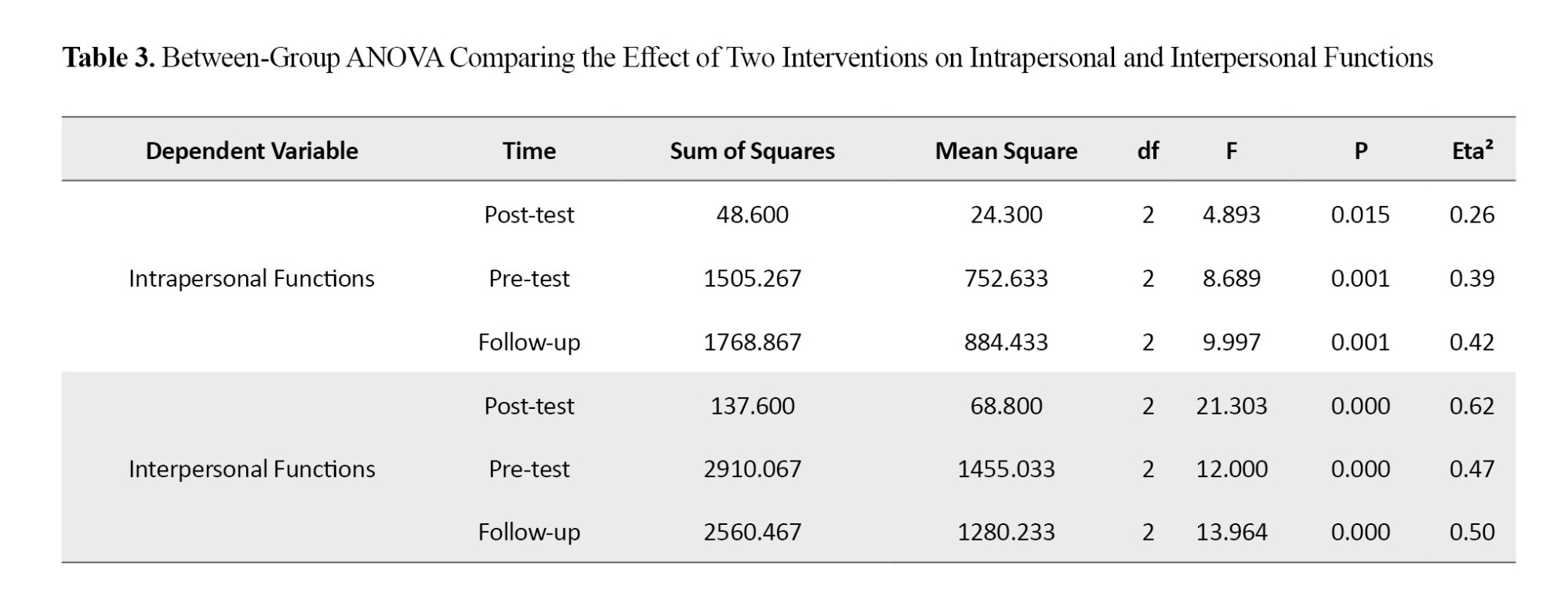
The findings in Table 3 reveal that both dialectical behavior therapy and quality of life enhancement interventions significantly improved intrapersonal (F=4.893, P=0.015) and interpersonal (F=21.303, P<0.001) functions at the post-test stage. Accordingly, the study hypothesis was confirmed.
Conclusion
Overall, the findings of the present study demonstrated that both the quality of life enhancement intervention and dialectical behavior therapy contribute to the prevention of self-injurious behaviors among delinquent adolescents. Given the prevalence of self-injurious behaviors in this population, understanding the benefits and challenges of various therapeutic approaches is of considerable importance. It appears that integrating Islamic-based quality of life training with dialectical behavior therapy skills may serve as an effective clinical intervention. Such integration, alongside other evidence-based practices, can contribute to the improvement and optimization of mental health interventions for delinquent adolescents by combining the strengths of Islamic perspectives on quality of life with empirically validated therapeutic methods.
Like other studies, this research also faced several limitations. First, self-report instruments were employed, which may have influenced the accuracy of the findings. Second, the study sample consisted exclusively of delinquent adolescents in Zahedan, thereby limiting the generalizability of the results to other regions of the country.
Based on these findings, several practical and research-oriented recommendations are suggested. Considering the effectiveness of both approaches, it is recommended that educational workshops on Islamic-based quality of life training and dialectical behavior therapy skills be implemented in correctional centers, special schools, and counseling institutions for delinquent adolescents. Such programs may help reduce self-injurious behaviors and enhance intrapersonal and interpersonal functioning. Furthermore, future studies with larger and more diverse samples (including both male and female adolescents from different cultural contexts) are encouraged to enhance the generalizability of findings and to explore possible differences in the effectiveness of the two interventions.
Ethical Considerations
Compliance with ethical guidelines
This article was approved by the research ethices committee of Farhangian University, Tehran (code: 273/8/1908/403). All ethical principles were considered in this article. The participants were informed of the purpose of the research and its implementation stages. They were also assured about the confidentiality of their information and were free to leave the study whenever they wished, and if desired, the research results would be available to them.
Funding
This research did not receive any grant from funding agencies in the public, commercial, or non-profit sectors.
Authors contributions
All authors contributed equally to the conception and design of the study, data collection and analysis, interpretation of the results, and drafting of the manuscript. Each author approved the final version of the manuscript for submission.
Conflicts of interest
The authors declared no conflicts of interest.
Acknowledgements
The authors extend their sincere gratitude and appreciation to the exemplary individuals, the institutions that issued the necessary permits, and the supervisors and consultants who provided invaluable assistance in conducting this study.
Research findings show that some adolescents express their psychological distress and internal contradictions through behaviors, such as self-harm to relieve negative emotions. Although researchers have increasingly focused on intentional self-harm in adolescents in recent years, information regarding this harmful behavior remains limited. There is also no accurate information about the prevalence of self-harm behaviors in non-clinical samples (Kentup et al., 2021). Given the importance of this issue, the impact of various factors on adolescent self-harm, particularly in delinquent adolescents, is widely acknowledged. Therefore, the use of prevention and treatment methods is an undeniable necessity. Therefore, this study aimed to compare the effect of Islamic quality of life education and dialectical behavior therapy skills training on self-harm behaviors in delinquent adolescents..
Research Methods
This research conducted as a quasi-experimental study employing a pre-test, post-test, and follow-up design, involving two intervention groups and one control group. It is a quantitative study in terms of research approach. The population for this study comprised all adolescents residing in the Zahedan Correctional Center in 2024. Using the purposive sampling method and employing the Power*G software (with an effect size of 0.15) to determine an appropriate sample size for quasi-experimental studies, the sample size for the present study was set at 60 adolescents.
The measurement tool used in this study was the Klonsky and Glenn Self-Harm Questionnaire. The first intervention group received the Islamic quality of life improvement training course, and the second intervention group received dialectical behavior therapy skills training. These interventions were delivered in 8 group sessions, each lasting 60 minutes (one session per week). The control group was placed on a waiting list. Multivariate analysis of covariance (MANCOVA) was used to analyze the research data.
Results
The results of Table 6 indicate that, based on the significance levels (p-values) for all within-group test statistics, the null hypothesis was rejected. Therefore, it can be concluded that the effect of the independent factor (time: pre-test, post-test, and follow-up) on the dependent variables was statistically significant. Table 1 thus presents the results of repeated measures ANOVA regarding the effect of time on the components of self-injurious behaviors among delinquent adolescents.
Table 2 provides the results of Duncan’s post hoc test for comparing the mean scores of the three groups (Intervention 1, Intervention 2, and Control) across the three measurement stages.
The results of Table 2 demonstrate that self-injurious behaviors differ significantly across time within the three subgroups. The lowest mean scores were observed in the post-test condition for both intrapersonal functions (M=5.3) and interpersonal functions (M=5.4) following the dialectical behavior therapy intervention. Similarly, the post-test of the Quality of Life intervention showed the lowest means for interpersonal functions (M=7.4) and intrapersonal functions (M=8.0). Additionally, during the follow-up stage, the mean scores of the intervention groups showed minimal change, while the control group’s mean scores increased. In other words, both dialectical behavior therapy and quality of life enhancement interventions contributed to a reduction in self-injurious behaviors.
The findings in Table 3 reveal that both dialectical behavior therapy and quality of life enhancement interventions significantly improved intrapersonal (F=4.893, P=0.015) and interpersonal (F=21.303, P<0.001) functions at the post-test stage. Accordingly, the study hypothesis was confirmed.
Conclusion
Overall, the findings of the present study demonstrated that both the quality of life enhancement intervention and dialectical behavior therapy contribute to the prevention of self-injurious behaviors among delinquent adolescents. Given the prevalence of self-injurious behaviors in this population, understanding the benefits and challenges of various therapeutic approaches is of considerable importance. It appears that integrating Islamic-based quality of life training with dialectical behavior therapy skills may serve as an effective clinical intervention. Such integration, alongside other evidence-based practices, can contribute to the improvement and optimization of mental health interventions for delinquent adolescents by combining the strengths of Islamic perspectives on quality of life with empirically validated therapeutic methods.
Like other studies, this research also faced several limitations. First, self-report instruments were employed, which may have influenced the accuracy of the findings. Second, the study sample consisted exclusively of delinquent adolescents in Zahedan, thereby limiting the generalizability of the results to other regions of the country.
Based on these findings, several practical and research-oriented recommendations are suggested. Considering the effectiveness of both approaches, it is recommended that educational workshops on Islamic-based quality of life training and dialectical behavior therapy skills be implemented in correctional centers, special schools, and counseling institutions for delinquent adolescents. Such programs may help reduce self-injurious behaviors and enhance intrapersonal and interpersonal functioning. Furthermore, future studies with larger and more diverse samples (including both male and female adolescents from different cultural contexts) are encouraged to enhance the generalizability of findings and to explore possible differences in the effectiveness of the two interventions.
Ethical Considerations
Compliance with ethical guidelines
This article was approved by the research ethices committee of Farhangian University, Tehran (code: 273/8/1908/403). All ethical principles were considered in this article. The participants were informed of the purpose of the research and its implementation stages. They were also assured about the confidentiality of their information and were free to leave the study whenever they wished, and if desired, the research results would be available to them.
Funding
This research did not receive any grant from funding agencies in the public, commercial, or non-profit sectors.
Authors contributions
All authors contributed equally to the conception and design of the study, data collection and analysis, interpretation of the results, and drafting of the manuscript. Each author approved the final version of the manuscript for submission.
Conflicts of interest
The authors declared no conflicts of interest.
Acknowledgements
The authors extend their sincere gratitude and appreciation to the exemplary individuals, the institutions that issued the necessary permits, and the supervisors and consultants who provided invaluable assistance in conducting this study.
References
Abasi Rad, A., Bahrami Hidaji, M., Tajeri, B., Mohamadi Shirmahaleh, F., & Ranjbari Poor, T. (2023). The effectiveness of schema therapy based on the mindset model based on emotional dysregulation and coherent self-knowledge in self-harming delinquent teenagers. Rooyesh, 12 (7), 93-102. [Link]
Abdullahi, R., & Nouri, T. (2024). Dialectical Behavior Therapy: Impact on self-harming behaviors, bullying, and cognitive emotion regulation in delinquent teenagers. Journal of Adolescent and Youth Psychological Studies (JAYPS), 5(5), 14-20. [DOI:10.61838/kman.jayps.5.5.3]
Afkhami Ardakani, M., & Dehghan, M. (2018). [The effectiveness of quality of life based on Islamic spiritual therapy on social adjustment of mothers with autistic children in Ardakan city (Persian)]. Journal of Islamic Psychology, 4(9), 29-53. [Link]
Afrahi, M. (2023). Self-Injurious behaviour among children in the child psychiatry inpatient unit [PhD dissertation]. Vilnius: Vilniaus Universitetas. [Link]
Baghban, R. (2019). Solutions for Improving the Quality of Iranian-Islamic Life. Paper presented at: Regional Conference on Applied Research in Humanities and Islamic Sciences, Tehran, Iran, 17-18 17-18, 2019. [Link]
Barendse, M. E. A., Lara, G. A., Guyer, A. E., Swartz, J. R., Taylor, S. L., & Shirtcliff, E. A., et al. (2023). Sex and pubertal influences on the neurodevelopmental underpinnings of schizophrenia: A case for longitudinal research on adolescents . Schizophrenia Research, 252, 231 -241. [DOI:10.1016/j.schres.2022.12.011]
Damavandian, A., Golshani, F., Safarinia, M., & Baghdasarians, A. (2021). [Comparison of the efficacy of compassion-based therapy and dialectical behavior therapy on aggression, self-harming behaviors, and emotional self-regulation of juvenile delinquents at Tehran Correctional Center (Persian)]. Social Psychology Researches, 11(41), 31-58. [DOI:10.22034/spr.2021.253334.1579]
Frisch, M. B. (2016). Quality of life therapy. In: The Wiley handbook of positive clinical psychology (pp. 409-425). New Jersey: Wiley. [DOI:10.1002/9781118468197.ch27]
Ghodrati, S. (2021). The effectiveness of dialectical behavior therapy on non-suicidal self-injurious behaviors in adolescent girls. Modern Advances in Behavioral Sciences, 6(54), 566-582. [Link]
Hashemi Nosratabad, T., Gargari, B., Bayrami, R., Rouhani M., & Ahad, M. (2022). The effectiveness of life skills training with an Islamic approach on students’ academic vitality. Quarterly Journal of New Psychological Research, 17(65), 309-317. [DOI:10.22034/jmpr.2022.13465]
Jakubovic, R. J., & Drabick, D. A. (2023). Dialectical behavior therapy-based interventions for externalizing problems among adolescents: A meta-analysis. Clinical Psychology: Science and Practice, 25. [DOI:10.1037/cps0000140]
Kentopp, S. D., Conner, B. T., Fetterling, T. J., Delgadillo, A. A., & Rebecca, R. A. (2021). Sensation seeking and nonsuicidal self-injurious behavior among adolescent psychiatric patients. Clinical Child Psychology and Psychiatry, 26(2), 430-442. [DOI:10.1177/1359104521994627]
Klonsky, E. D., & Glenn, C. R. (2009). Assessing the functions of non-suicidal self-injury: Psychometric properties of the Inventory of Statements About Self-injury (ISAS). Journal of Psychopathology and Behavioral Assessment, 31, 215-9. [DOI:10.1007/s10862-008-9107-z]
Klonsky, E.D., & Muehlenkamp, J. J. (2007). Self-injury: A research review for the practitioner. Journal of Clinical Psychology, 63, 1045–1056. [DOI:10.1002/jclp.20412 ]
Lim, K. S., Wong, C. H., McIntyre, R. S., Wang, J., Zhang, Z., & Tran, B. X., et al. (2019). Global lifetime and 12-month prevalence of suicidal behavior, deliberate self-harm and non-suicidal self-injury in children and adolescents between 1989 and 2018: A meta-analysis. International Journal of Environmental Research and Public Health, 16(22), 4581. [DOI:10.3390/ijerph16224581]
Linehan, M. M., Dimeff, L. A., Reynolds, S. K., Comtois, K. A., Welch, S. S., & Heagerty, P., et al. (2002). Dialectical behavior therapy versus comprehensive validation therapy plus 12-step for the treatment of opioid dependent women meeting criteria for borderline personality disorder. Drug and Alcohol Dependence, 67(1), 13-26. [DOI:10.1016/S0376-8716(02)00011-X]
Liu, M., Xiao, J., Kamper -DeMarco, K. E., & Fu, Z. (2023). Problematic internet use and suicidality and self-injurious behaviors in adolescents: Effects of negative affectivity and social support. Journal of Affective Disorders , 325, 289 -296. [DOI:10.1016/j.jad.2023.01.019]
Lloyd-Richardson, E. E., Perrine, N., Dierker, L., & Kelley, M. L. (2007). Characteristics and functions of non-suicidal self-injury in a community sample of adolescents. Psychological Medicine, 37, 1183–1192. [DOI:10.1017/S003329170700027X ]
Moshkabadi, E. G., Heydari, S., & Fakhri, M. (2024). [Comparison of the effectiveness of cognitive behavioral training and acceptance and commitment training on high-risk behaviors in self-injurious adolescents (Persian)]. Journal of Adolescent and Youth Psychological Studies (JAYPS), 5(5), 126-35. [DOI:10.61838/kman.jayps.5.5.15]
Najarpour Ostadi, S, Akbari, B., Khalatbari, J., & Babapour Khairuddin, J. (2019). [Comparing the effectiveness of teaching dialectical behavior therapy techniques and quality of life-based therapy on the impulsivity of female students with smartphone addiction (Persian)]. Journal of Modern Psychological Researches, 16(62), 32-45. [Link]
Nazarifar, M., Savari, H., & Moghaddam, H. K. (2022). The Effectiveness of Group-Based Dialectical Behavior Therapy in Aggression and Social Adjustment of Single-Parent Adolescents. International Journal of Health Studies, 8(4), 1-5. [Link]
Nock, M. K., & Prinstein, M. J. (2004). A functional approach to the assessment of self-mutilative behavior. Journal of Consulting and Clinical Psychology, 72(5), 885. [DOI:10.1037/0022-006X.72.5.885]
Pedrola-Pons, A., Sanchez-Carro, Y., Pemau, A., Garcia-Ramos, A., & De la Torre-Luque, A. (2024). Efficiency of psychological interventions in the prevention of suicidal behavior and self-injury in penitentiary population: A systematic review. International Journal of Law and Psychiatry, 92, 101948. [DOI:10.1016/j.ijlp.2023.101948]
Peyman Nia, B., Hamid, N., Mehrabizadeh Artman, M., & Mahmoud Alilo, M, (2017). [Effectiveness of dialectical behavior therapy based on teaching skills to family and child on impulsivity and quality of life of girls with self-injurious behaviors (Persian)]. Iranian Journal of Rehabilitation Research in Nursing, 4(3). [ Link]
Saberpour, H., & Zohri, K, (2023). A study of ways to prevent passive suicidal thoughts from the perspective of the revealed religion of Islam. Paper presented at: 9th Student Conference on the Study of Health Culture from the Perspective of the Quran and Hadith, Tehran, Iran. [Link]
Serajzadeh Esfahani, M., & Mehrabi, H. (2020). Predicting social well-being based on Islamic lifestyle and social skills of Isfahan city people. Journal of Islamic Psychology, 6(13), 65-83. [Link]
Son, Y., Kim, S., & Lee, J. S. (2021). Self-injurious behavior in community youth. International Journal of Environmental Research and Public Health, 18(4), 1955. [DOI:10.3390/ijerph18041955]
Willoughby, T., Heffer, T., Good, M., & Magnacca, C. (2021). Is adolescence a time of heightened risk taking? An overview of types of risk-taking behaviors across age groups. Developmental Review, 61, 100980. [DOI:10.1016/j.dr.2021.100980]
Yadollahpour, M., Hasanzadeh, R., & Fazeli Kebria, M. (2014). Comparative study on “Improvement of Quality of Life” from the Viewpoint of Islam and Positivist Psychologists. Journal of Research & Health, 1(1), 72-81.
Yusefi, A. A., Dahestani, M., Abaspour, P., Bakhtiari, M., & Vafaee, S. (2015). [Evaluation of the effectiveness of quality of life therapy (QOLT) on individual well-being and happiness of infertile women (Persian)]. Mediterranean Journal of Social Sciences, 6(6), S6. [Link]
Type of Study: Research |
Subject:
Special
Received: 2025/04/28 | Accepted: 2026/01/3 | Published: 2026/01/3
Received: 2025/04/28 | Accepted: 2026/01/3 | Published: 2026/01/3
Send email to the article author
| Rights and permissions | |
 |
This work is licensed under a Creative Commons Attribution-NonCommercial 4.0 International License. |